

When first responders need to communicate with one another, there is no room for error. In addition to providing call-taking and dispatch services, E-Comm owns and operates the largest multi-jurisdictional public safety radio network in B.C. and one of the largest in Canada.
BC Emergency Health Services, all police agencies, and 18 fire departments across Metro Vancouver and Abbotsford rely on E-Comm’s radio network to communicate critical information. TransLink operating companies (Coast Mountain Bus Company and BC Rapid Transit Company) also depend on E-Comm to ensure seamless, real-time communication across agencies and locations, keeping first responders and essential services coordinated when it matters most.
February 13 marks World Radio Day, and E-Comm recognizes the team responsible for maintaining the radio system most critical to public and first responder safety. Unlike other systems across North America, E-Comm’s radio is managed entirely in-house by its very own wireless team, offering constant visibility into system health and the ability to resolve issues quickly.
Meet Dave Cameron, Senior Wireless Platform Specialist
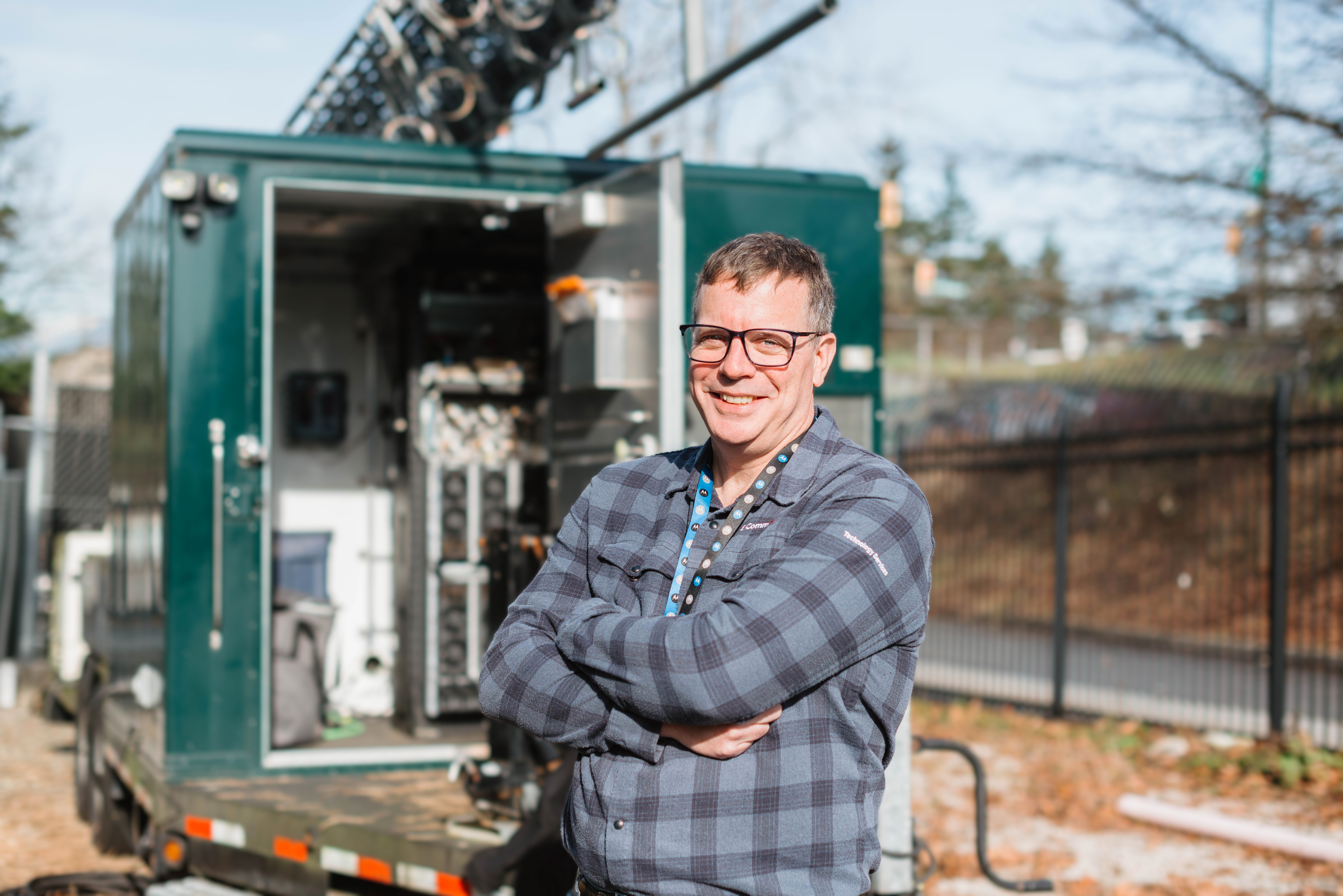
Dave Cameron has been fascinated by two-way radio since childhood and has been an avid amateur radio operator since 1993. Always more interested in understanding how systems work than simply using them, Dave built a strong technical foundation that would later shape his career.
Although he holds a bachelor’s degree in chemical engineering, his passion for radio communications—combined with experience in electrical power systems and project management—led him to join E-Comm in 2014 as a Project Manager with the Next Generation Radio Program. Most recently, Dave transitioned into the role of Wireless Platform Specialist, where he continues to support and strengthen E-Comm’s critical public safety radio network.
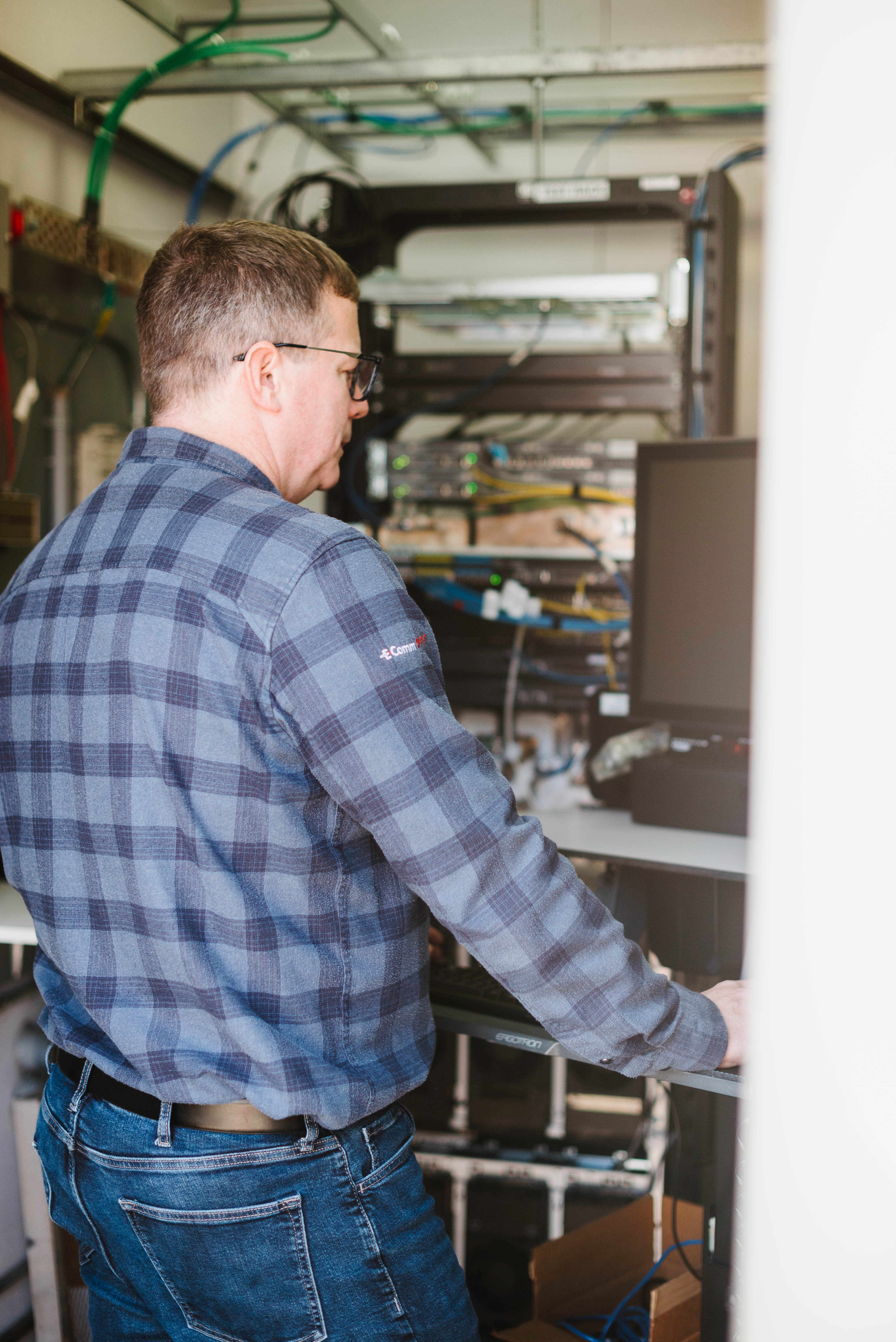
Dave is an integral member of the team who spent over five years specializing in radio interference, developing an innovative, cost-effective system to detect it, assess its potential impact, and pinpoint likely sources. While similar solutions exist, Dave designed and built a system in-house to meet E-Comm’s unique operational needs.
This radio system exists for a reason
When the Stanley Cup riot broke out in 1994, a surge of radio traffic overwhelmed first responder systems. First responders couldn’t communicate with one another because they operated on separate networks, making it difficult to coordinate their response. This incident led to the birth of E-Comm and a new regional radio system.
Protecting the airwaves
Most people never think about radio systems until something goes wrong.
Imagine a firefighter inside a burning building pressing the push-to-talk button to order an evacuation. There’s no room for interference or time for delay. Every transmission must go through—and that’s where the wireless team comes in.
Part of their work involves tracking and eliminating radio frequency interference (signals that can compete with or disrupt emergency communications). Using innovative, in-house software defined radios (SDRs) installed at tower sites, the team can detect interference early, assess its impact and trace it to its source.
The frequencies used by E-Comm’s system were repurposed from over-the-air TV channels in 2004. Some older devices, like wireless microphones or speakers, still operate on those bands and can unintentionally cause interference—another reason why constant monitoring is essential.
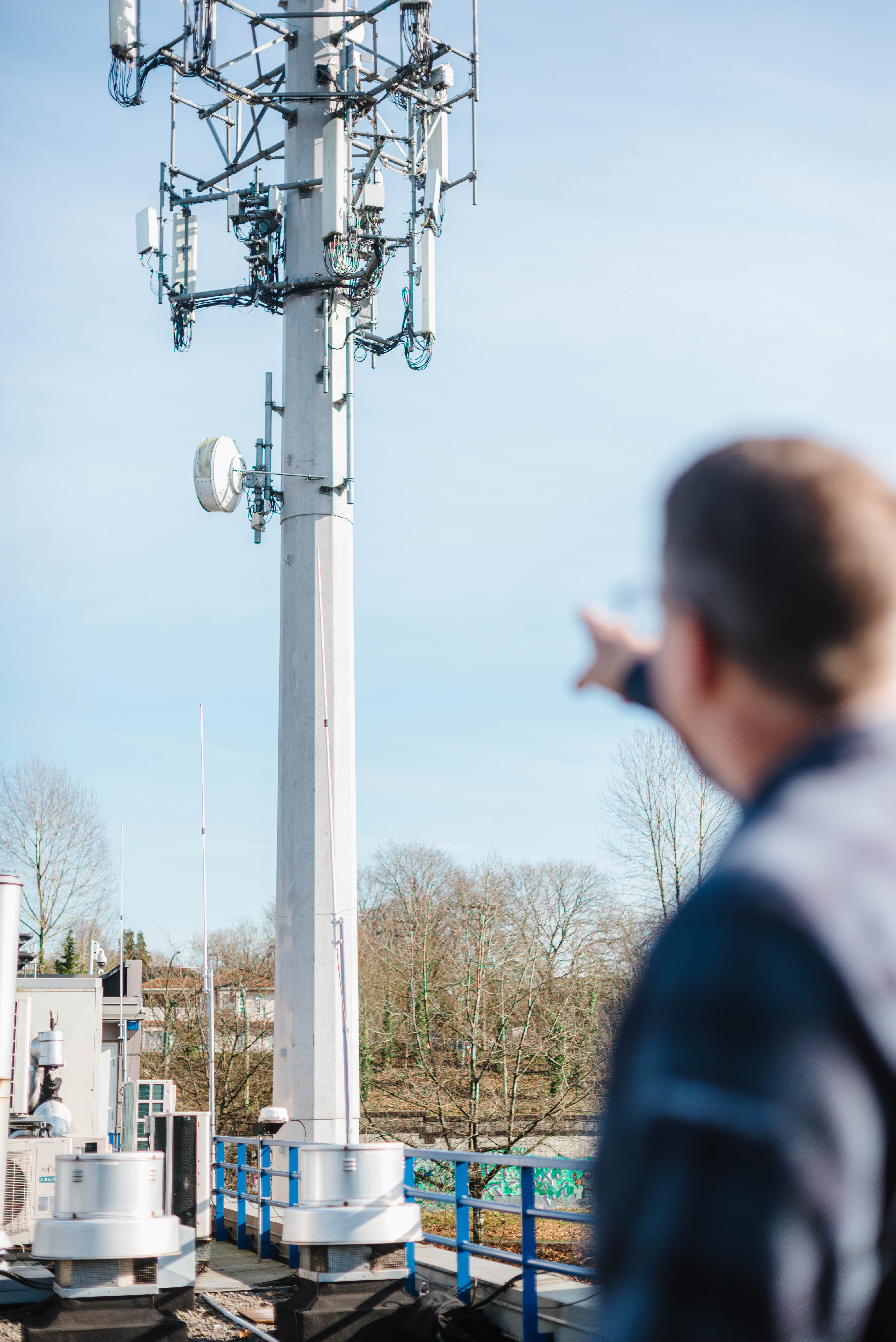
Did you know that trees can also create interference? Our wireless technicians can navigate specialized drones through heavily forested areas to identify the exact GPS coordinates of trees or branches interfering with the airwaves.
Maintaining clear and open frequencies is key to making sure the airwaves stay clear for the voices that need to be heard the most.
Celebrating the Wireless Team on World Radio Day
The Wireless team is made up of members like Dave who play a critical role in the infrastructure that supports public safety. On World Radio Day, we celebrate those behind the technology that connect first responders when it matters the most.